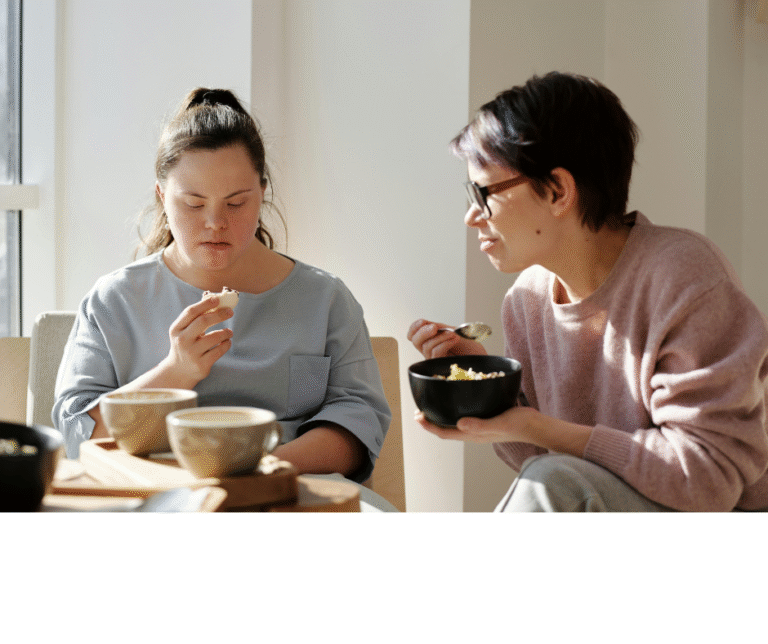
Supporting people with learning disabilities means recognising each person as an individual, with their own strengths, preferences, aspirations and support needs. Care should be built around the person, empowering them to make their own choices, develop their independence, participate in everyday life and achieve the things that matter to them. The focus should always be on enabling people to live fulfilling lives, with the right support to overcome barriers and reach their potential.
In this post we’ll briefly outline what learning disabilities are, and how they might impact a care plan, before discussing what person-centred care might look like in practice.
What is a Learning Disability?
The NHS defines a learning disability as a condition that “affects the way a person learns new things throughout their life.” They highlight how learning disabilities are different for everyone, but common issues might include difficulties with:
- Communicating
- Understanding complex information
- Learning certain skills
- Looking after themselves
- Living alone
You can read the full NHS guidance to learning disabilities.
The Importance of Personalised Care For People With Learning Disabilities
Every person with a learning disability is unique, with their own abilities, strengths, preferences and support needs. The support they receive should reflect who they are as an individual, taking into account their personal circumstances, daily experiences and aspirations. A good care plan should build on their strengths, promote independence and provide the right support to help them navigate everyday challenges, ensuring their wishes, choices and goals remain at the centre of their care
When it comes to caring for people with learning disabilities, it’s vital that you tailor the care to suit their unique situation. It’s also important that you involve them directly in the process, as they are better qualified than anyone to talk about what works for them.
As well as helping the person to manage their learning disability and any associated health conditions, the ultimate aim of any care plan should be to support the person to live as independently as possible. You are giving them the support they need to live a meaningful life in which they are free to pursue their hobbies and interests, and to work towards their personal goals.
How Do Learning Disabilities Affect Care Needs?
There is no one-size-fits-all approach to caring for people with learning disabilities. Every individual will need their own personalised care plan, with a focus on the person rather than their specific condition.
The care plan might include practical support with:
- Personal Care – The person might need help with certain daily tasks, such as getting dressed, washing, eating, and managing their medication.
- Communication – Many people with learning disabilities struggle with communication. So, a care plan might include the use of communication aids, listing the tools and techniques the carer might use to help the person express themselves. This might include sign language, Signalong, Makaton, or a picture exchange communication systems (PECS).
- Specialist Healthcare – Some learning disabilities can have associated health conditions. There may be a risk of seizures, for example, or the person might have certain mobility issues. The care plan should list these conditions, and the specialist support necessary to help the person manage these conditions while retaining their independence.
- Home Care – Many people with learning disabilities are able to live alone with full independence. But others might need some support with certain household tasks, including cooking, cleaning, and running errands.
Once again, the person receiving care and support should be directly involved in any plans or decisions you make for them. Choice, independence, and empowerment should be at the core of any care plan.
How Crossroads Care Can Support People With Learning Disabilities, and Their Carers
If you live in Surrey or by its borders, you can get bespoke support with the Crossroads Direct service.
We can help you create a dedicated person-centred care plan for someone with learning disabilities, and we will work closely with the individual receiving care throughout the process. We can also arrange for respite care, should you ever need to take a break from your caring commitments.
Learn more about Crossroads Direct home help services. For more information, call 01372 677 831.